

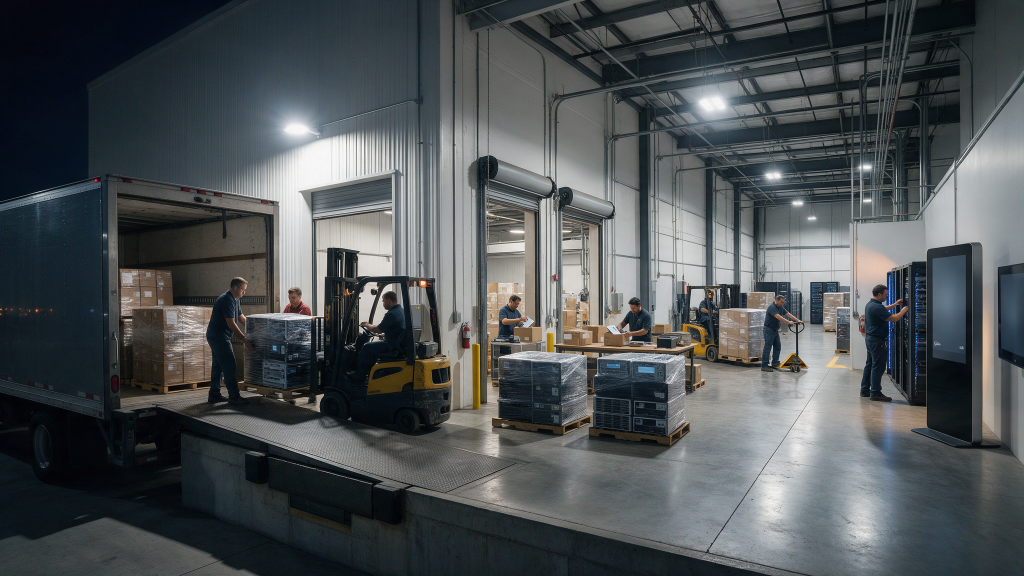
The Loading Dock Isn't the Finish Line
Your equipment arrived. According to the tracking number, the shipment was delivered at 10:42 AM. There's just one problem: the technology isn't actually where it needs to be. For enterprise technology projects, transportation is only one part of logistics.
Equipment may still need to be received, inventoried, moved inside the building, staged, unpacked, assembled, installed and connected before it provides any value. A successful delivery notification tells you where the freight journey ended. It doesn't necessarily tell you whether the technology deployment has even begun.
Moving technology from Point A to Point B is transportation. Getting it received, tracked, positioned, installed and working is deployment. Those are very different outcomes.
- Mathew Perez, Project Manager at SG Network Services
Technology Freight Isn't Ordinary Freight
A pallet containing network equipment, kiosks, displays, racks or other electronics isn't simply cargo. It may contain serialized assets that need to be tracked, require specialized handling, need to arrive during a specific installation window or require inside delivery to a precise location. Technology from manufacturers such as Elo Touch Solutions, for example, may ultimately need to reach a specific retail or customer-facing environment rather than simply a receiving dock.
The technician installing that equipment may also be arriving the same day. When logistics and field services are managed as unrelated activities, a very large gap can develop between "delivered" and "ready to install." Coordinating transportation, delivery and field execution allows technicians to know where equipment is, project teams to know whether sites are ready and problems to be identified before they create missed appointments and unnecessary return visits.The last mile isn't always the last mile. Sometimes the hardest part of the entire journey is the last 500 feet between the loading dock and the place where the technology actually has to work.
- Chris Harper, Sr. Director at SG Network Services
The Last 500 Feet Can Be the Hardest
Getting equipment across the country can sometimes be easier than getting it from the loading dock to its final destination. Large displays may need to travel through service corridors, network racks may need to reach a specific telecom room, kiosks may require unpacking and assembly, and datacenter equipment may have strict receiving and access requirements. Inside delivery, white-glove handling and onsite technical resources can therefore be just as important as transportation.
Once equipment arrives, logistics also begins to overlap with asset management. Technologies from Zebra Technologies are widely used for barcode scanning, mobile computing and asset visibility because organizations need to know what they received and where it went. For technology deployment, serial-number capture, asset tracking and installation records connect the movement of equipment with the IT systems that will manage it throughout its useful life.
What Goes In Eventually Comes Out
Technology logistics also moves in the opposite direction. Refresh programs generate retired routers, switches, computers, displays, peripherals and other electronic assets that may require inventory, secure handling, data sanitization, certified recycling or responsible disposal. A complete deployment strategy should consider how new technology gets into service and how retired technology eventually gets out.
At SG Network Services, we believe logistics should be connected to the outcome. The objective isn't simply moving a box from Point A to Point B. It's getting the right technology to the right location, at the right time and ultimately putting it to work. Technology isn't deployed because it arrived.